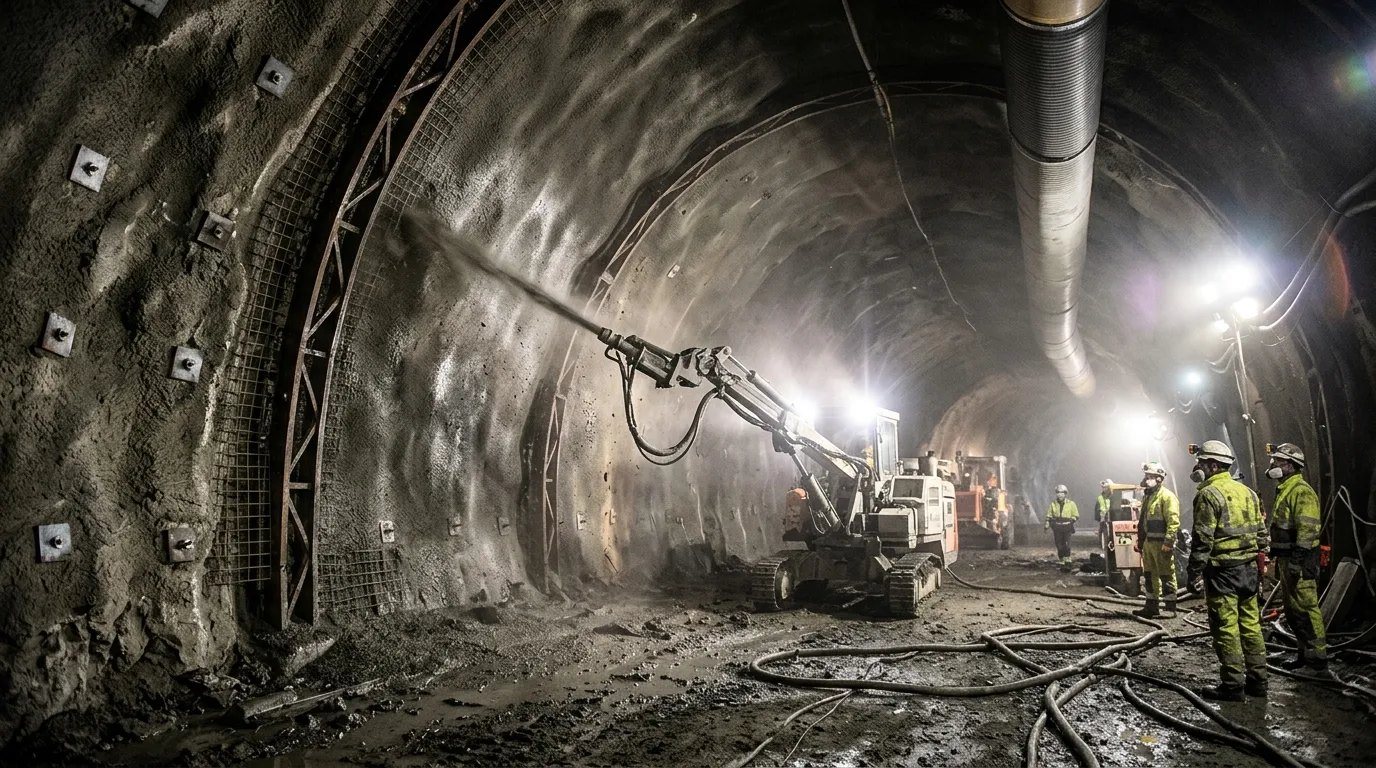
One team from rock mass characterisation to installed support.
Our geotechnical engineers define support classes and portal designs, and our specialist works teams install them. Keeping both under one technical lead carries the design intent through to the tunnel face.
Tunnel Support Design
Support classes derived from rock mass classification and verified by numerical analysis.
- Q-system and RMR support classes
- 2D / 3D numerical analysis
- Excavation and support sequence
- Instrumentation and monitoring plans
- Support drawings, specifications and BOQ
Tunnel Rock Bolts
Systematic and spot bolting with fully grouted and self-drilling bolts, including pull-out testing.
- Fully grouted rebar bolts
- Self-drilling hollow-bar bolts
- Face bolts and forepoling
- Pull-out and acceptance testing
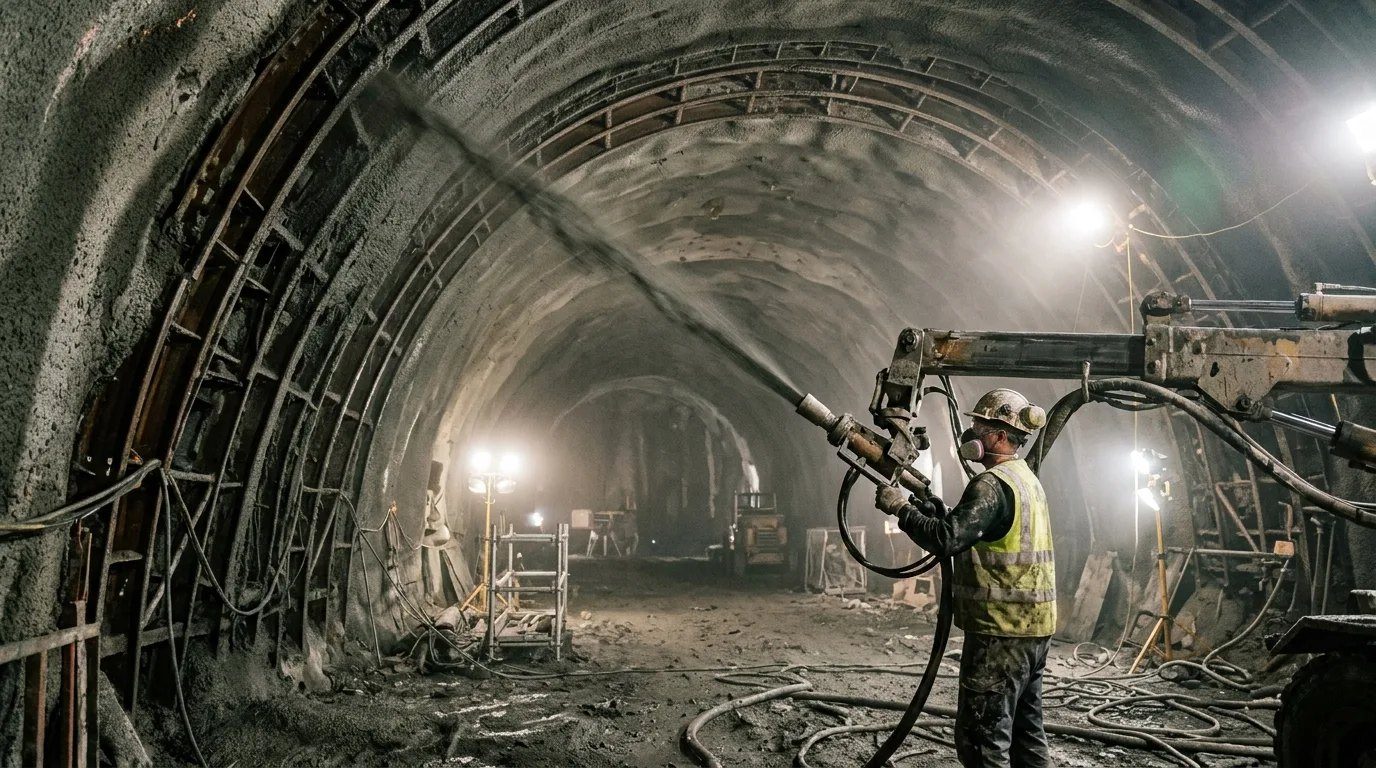
Sprayed Concrete
Wet-mix sprayed concrete for primary linings, face sealing and portal faces.
- Plain and fibre-reinforced sprayed concrete
- Mesh-reinforced linings
- Thickness control and probing
- Early-strength testing
Lattice Girders & Steel Ribs
Steel support sets for weak rock, fault zones and portal sections.
- Lattice girders (3-bar / 4-bar)
- Steel ribs and arches
- Footing and invert connections
- Spiling and pipe umbrella interface
Waterproofing & Drainage
Membranes and drainage that keep the final lining dry and relieve water pressure.
- Geotextile and PVC / TPO membranes
- Sidewall and invert drains
- Radial drainage holes
- Water ingress grouting
Portal Stabilization
Cut slopes, canopies and reinforcement at the most vulnerable part of a tunnel.
- Portal cut slope design and support
- Soil nails, anchors and shotcrete
- Rockfall protection above portals
- Portal drainage and flood checks